Every founder reaches a point where the weight of decisions stops feeling manageable alone. The stakes are higher, the variables are more complex, and the cost of a wrong call is no longer easy to absorb. You might respond by relying harder on instinct or leaning on internal teams who are too close to the business to offer a genuinely independent perspective.
There is a better option.
Peer groups have quietly become one of the most effective catalysts for stronger business planning and decision-making, not because they replace a founder’s judgement, but because they sharpen it in ways that thinking in isolation simply cannot.
Why Traditional Decision-Making Falls Short for Founders
The default decision-making environment for most founders is deeply limited. Internal teams bring useful execution knowledge but rarely challenge strategic direction. Advisors offer perspective but are rarely available in the moment a decision demands clarity. And founders themselves carry biases shaped by their own experience, which is valuable until it becomes the only lens being applied.
Echo chambers form quietly. When the same group of people evaluate the same ideas through the same filters, blind spots go undetected, and assumptions go unquestioned. Add to this the pressure of making fast decisions without adequate validation and the absence of a safe space to discuss real strategic uncertainty, and the conditions for poor judgement are firmly in place.
Decision fatigue compounds the problem further. When a founder is responsible for every significant call across operations, finance, people, and strategy, the quality of thinking at the end of that chain is rarely the same as at the beginning. This is where good decision-making in business breaks down, not from a lack of intelligence but from a lack of the right environment.
ASCENT Foundation was designed to be that environment. We bring growth-stage founders together in a trusted peer-learning ecosystem where your conversations are structured, your relationships are built on trust, and the impact on your business decisions is real.
What Are Peer Groups & How They Work
Peer groups are curated communities of entrepreneurs at similar growth stages who come together regularly to work through real business challenges. They are not mentorship programmes, industry associations, or general networking circles. They are structured environments built specifically around trust, confidentiality, and the kind of honest exchange that most professional settings do not allow.
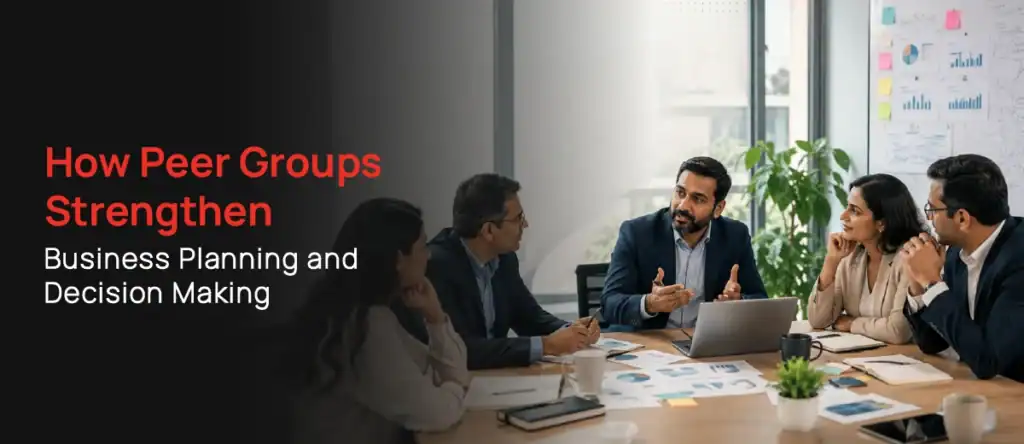
A typical peer group meets on a regular cadence. Members bring live challenges to the table: a hiring decision, a strategic pivot, a difficult conversation with a co-founder, or a question about whether to raise capital. The group responds not with advice handed down from authority but with experience, questioning, and collective problem-solving.
This model encourages genuine group decision-making in business by creating a forum where multiple perspectives engage with a single problem simultaneously. The shift from solo thinking to collective intelligence is not just a change in process. It is a change in the quality of outcomes. Decisions made through structured peer dialogue are typically more grounded, stress-tested, and consistently followed through than those made in isolation.
Make better business decisions with ASCENT Foundation’s trusted peer groups.
6 Ways Peer Groups Improve Business Decision-Making
1. Broader Perspectives That Break Bias
When a founder brings a challenge to a peer group drawn from different industries and business models, the response is not shaped by a single perspective. A manufacturing founder’s pricing dilemma looks different through the lens of a D2C founder’s margin experience. Cross-industry exposure challenges assumptions, surfaces angles that would not emerge from within a single sector, and creates the conditions for sharper thinking.
2. Real-Time Problem Solving with Experienced Peers
One of the most evident benefits of group decision-making is that it has a fast and relevant feedback loop. The peers who have undergone the same process can offer practical experience rather than theories. The quality of a decision improves significantly when it is tested against the real experiences of people who have faced comparable situations.
3. Idea Validation Before Execution
Testing a strategy in a trusted peer environment before committing capital or changing direction is one of the lowest-cost risk management tools available to a founder. Peer groups create a safe, low-stakes space to pressure-test thinking, surface weak assumptions, and refine an approach before it is acted on.
4. Stronger Risk Assessment
Better decision-making in business requires decisions to be examined from multiple angles before they are made. In a peer group, stress-testing is built into the format. Different members will identify different risks, flag different concerns, and ask different questions. The result is a more complete picture of what a decision actually involves.
5. Accountability That Improves Follow-Through
A decision made in isolation is easy to quietly abandon. A decision shared with a peer group carries a different kind of weight. Since people know that there will be a follow-up, it creates an inherent structure of accountability that makes sure that there is discipline and that actions are taken rather than just good intentions.
6. Learning from Others’ Wins and Mistakes
Some of the most valuable knowledge in a peer group is never formally shared. It surfaces in passing: a costly hiring mistake, a market entry that did not go as expected, and a pricing decision that transformed margin. Business strategy discussions with peer groups are as much about learning from what others have already lived through as they are about solving current problems.
The Shift: From Individual judgement to Collective Intelligence
As a founder, you are trained by necessity to trust your own judgement. However, intuition alone, without external perspective or structured dialogue, is a fragile foundation for your most critical decisions.
The shift that peer groups enable is not about replacing your judgement, but augmenting it. By working through a challenge with other founders, you spot blind spots faster and achieve clarity through structured debate rather than isolated introspection. This combination of shared experience and peer insight produces a depth of thinking that no leader, operating entirely on their own, can consistently replicate.
Ultimately, this collective intelligence becomes a genuine strategic advantage. It is not a supplement to strong leadership; it is what strong leadership looks like at scale.
Challenges in Group Decision-Making and How to Overcome Them
Group decision-making in business is not without its risks. Groupthink is the most cited: when cohesion within a group suppresses dissent and produces a consensus that was never genuinely earned. Without diverse perspectives and deliberate facilitation, peer groups can drift toward validating what members already believe rather than challenging it.
Dominant personalities can influence the result. If one person’s level of confidence or seniority always influences how a discussion evolves, then the collective intelligence of the entire group is not being utilised.
Time commitment is another important consideration. A peer group only delivers value if members show up consistently and engage fully. Irregular participation undermines the trust and continuity on which the group depends.
Over-dependence on group validation can also erode a founder’s independent thinking over time if the balance between contribution and deference is not actively maintained.
The solutions are structural: constructive disagreement should be encouraged as a norm, strong facilitation should be a design feature rather than an afterthought, and members should enter each session with their own thinking already formed. When these conditions are in place, the true advantages of group decision-making are consistently realised.
How ASCENT Enables Better Decision-Making Through Peer Groups
ASCENT Foundation is structured to address the specific decision-making challenges that growth-stage founders face.
- Trust Groups create the conditions for deep, confidential conversations where founders can openly share what is really happening across their business, their leadership, and their personal journey, without concern for competitive exposure or reputational risk.
- PowerUp Sessions connect founders with domain experts and accomplished industry leaders for one-on-one mentoring that offers personalised guidance and an objective external perspective on their most pressing business challenges.
- ASCENT Huddles bring together 50 to 100 participants from different industries and sectors for structured knowledge transfer that breaks assumptions formed inside a single sector and surfaces angles that would not otherwise be considered.
- Boardroom Sessions give ASCENT members exclusive access to present real business challenges to respected industry leaders, turning complex decisions into opportunities for strategic learning.
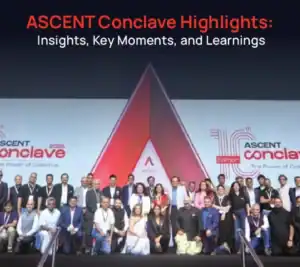
- The ASCENT Conclave is the foundation’s flagship annual gathering where the entire community comes together in one room for a day of meaningful conversations and shared growth.
- Special Interest Groups, or SIGs, offer focused conversations for sector-specific challenges where the knowledge shared is directly applicable to the industry context of the members involved.
Across all of these formats, ASCENT Foundation is designed to build clarity in thinking, enable better strategic decisions, and deliver consistent peer learning. For founders looking to move beyond isolated judgement, exploring peer-learning groups within a structured ecosystem is a meaningful first step. The result is a community that strengthens business planning and decision-making at every stage of growth.
Join a structured peer community built for growth-stage founders like you.
Conclusion: The Clarity Behind Consistent Growth
The quality of a founder’s decisions over time is one of the most accurate predictors of how far a business will go. Peer groups do not make decisions for founders. They create the environment in which founders make better ones. Through structured dialogue, honest challenge, and the compounding effect of sustained peer relationships, the right group becomes one of the most valuable tools a growth-stage founder can access. Attend the right entrepreneur meet and experience firsthand what structured peer engagement can do for your business planning and decision-making.
FAQ’s