Most founders remember the journey to their first crore. It is often driven by relentless effort, quick decisions, and a hands-on approach to solving every challenge. However, the path from ₹1 crore to ₹100 crore requires a fundamentally different mindset and business growth strategy. What helped build the business in its early years can become a constraint during the next phase of growth.
The sheer complexity of managing expanding teams, finances, and operations means that what once required hustle now demands strategy. The businesses that scale successfully are the ones that strengthen their systems, build capable teams, and create structures that support sustainable growth. The real shift is not about doing more; it’s about building an organisation that can grow beyond the founder.
Why Many Growth-Stage SMEs Struggle to Scale Further
Many Indian SMEs reach a point where their revenue continues to grow, but organisational capability does not keep pace. The business may be generating opportunities, yet founders often spend more time solving internal challenges than pursuing strategic growth. One common issue is delaying investments in leadership talent.
In an effort to remain lean, businesses often prioritise cost control over capability building, leaving critical functions dependent on founder involvement. Financially, companies may take on additional debt without establishing clear visibility into returns or future cash flow implications.
Yet another difficulty lies in perceiving compliance and governance as matters of administration rather than as cornerstones of strategy for future growth. As companies grow larger, their need to adhere to regulations and standards grows.
Most importantly, many organisations strive to grow revenues without developing the processes necessary to support that growth. This means that their efforts lead to inefficiencies rather than sustainable growth.
Financial Strategy: From Bookkeeping to Predictive Growth Control
1. Moving Beyond Historical Reporting
A successful business growth strategy requires founders to move beyond historical accounting and embrace forward-looking financial intelligence.
In the early stages of growth, reviewing monthly profit and loss statements may provide sufficient visibility. At scale, leaders need a clear understanding of what is likely to happen in the months ahead. Rolling forecasts, cash flow projections, and scenario planning allow businesses to make proactive decisions instead of reacting to problems after they occur.
2. Building Visibility Into Profitability
Growth can sometimes hide inefficiencies. As businesses expand, founders need visibility into profitability across products, geographies, customer segments, and service lines.
The knowledge of profit centres will enable the organisation’s leadership to better distribute the available resources. It is very important to have this kind of clarity when developing a business expansion strategy.
3. Managing Cash Flow During Growth
Rapid growth often creates pressure on working capital. However, while the income might go up, there can be some liquidity problems too. Tools such as TReDS can help improve receivable management. When a company grows, it is equally important to have financial discipline.
Operational Strategy: Why Process Must Come Before People
1. People Scale Effort. Processes Scale Outcomes
One of the most expensive assumptions founders make is believing they need more people when what they actually need are better processes. As organisations become more mature, informal processes will start causing bottlenecks, inconsistencies, and a dependency on the founding entrepreneur. For growth to be sustainable, systems must be created that produce predictable results no matter who uses them.
2. Eliminating Founder Bottlenecks Through SOPs
Documented procedures for procurement, sales, credit management, customer service, and delivery ensure consistency across the organisation.
These processes create a level of autonomy from individual actions and enable decision-making with increased confidence. In addition, they free the founder to concentrate on strategy rather than constantly resolving issues.
3. Reaching the ERP Inflexion Point
Eventually, many expanding companies outgrow the use of spreadsheets and separate software applications. Unified applications like SAP Business One, Zoho, and Oracle NetSuite provide a single platform to streamline all business operations. Better visibility often leads to improved decision-making.
4. Leveraging Automation for Sustainable Scale
Technology should help drive genuine scalability in your organisation, rather than merely expanding its size. With the use of cloud computing architecture, automation, and AI, your business will be able to handle increased complexity without increasing costs. This is a critical component of any scalable growth strategy.
Grow alongside founders navigating the same scaling challenges as you.
Leadership Strategy: Scaling the Founder Before Scaling the Business
1. Moving Beyond Founder-Centric Decision Making
Every founder eventually reaches a point where their personal capacity becomes the company’s biggest growth constraint.
The transition to sustainable scale requires founders to move on from making every important decision to creating systems that enable others to make good decisions consistently. Sustainable growth depends on building an organisation that can operate effectively beyond the founder’s direct involvement.
2. Building a Strong Leadership Layer
A strong second tier of leaders must be in place at this stage.
The functional leaders in the areas of HR, sales, operations, and finance require the necessary power and responsibility to handle their respective functions. The founder should have the freedom to focus on strategy and relationships. This does not mean mere delegation; it means creating an organisation that can work.
3. Balancing Agility With Accountability
The most successful businesses retain their initial pace and flexibility while adding measures of performance, structure, and accountability that enable further success. The process of scaling the company usually starts with scaling the leadership of its founder.
Sales and Marketing Strategy: From Opportunistic Wins to a Repeatable Revenue Model
1. Transitioning Away From Founder-Led Sales
Many businesses achieve their early growth through founder relationships, referrals, and personal credibility. While such methods may help in attaining growth, scaling up will be impossible if everything depends on the personal ability of the founder to close each big deal. Long-term expansion requires a sales process that operates independently of individual heroics.
2. Building a Predictable Revenue Engine
The business growth strategy must be aimed at developing repeatable and measurable revenue models. The sales team must understand the different stages, ratios, customer acquisition process, and pipeline forecasts. Predictability becomes increasingly important as your organisation continues to scale and commit larger investments to growth.
3. Why Founder Branding Matters
The marketing strategy itself changes at this stage. The use of an omnichannel approach through digital marketing, PR activities, thought leadership, exhibition, and sector involvement contributes to enhanced market visibility. Personal branding becomes a powerful competitive tool for founders working in the lucrative B2B and B2G segments.
How the ASCENT Ecosystem Supports Founders at This Stage
1. Learning Through Shared Experiences
As businesses grow, founders often discover that frameworks, consultants, and business books can only take them so far. The challenges become more nuanced, and the decisions carry greater consequences.
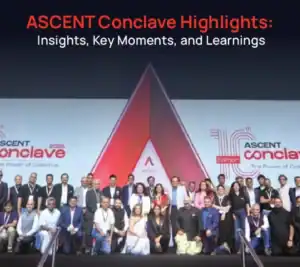
At this stage, the most valuable insights often come from peers who have faced the same crossroads. This is where ASCENT Foundation comes in. A trusted peer-learning ecosystem, ASCENT brings growth-stage founders together in a safe, structured environment built on trust, candid conversations, and shared experiences.
Through Huddles and Boardroom Sessions, and our other core offerings, conversations focus on real business situations, from leadership transitions and succession planning to operational bottlenecks and growth decisions. These discussions are practical, experience-led, and rooted in lived reality rather than theory.
2. The Power of Collective Experience
Today, ASCENT’s ecosystem includes more than 1,300 entrepreneurs across 45+ cities and over 65 industries, creating opportunities for meaningful peer learning and perspective sharing.
These interactions often surface ideas, approaches, and solutions that may never emerge within a founder’s immediate network. For entrepreneurs exploring business networking groups in India, the value often lies in gaining access to collective experience rather than simply expanding a contact list.
The conversations are experience-led, confidential, and designed to help founders navigate growth with greater clarity and confidence.
Join India’s most trusted peer community for growth-stage founders today.
Conclusion: The Clarity Behind Consistent Growth
The journey from initial success to market leadership is rarely driven by a single breakthrough. It is often the result of better decisions supported by stronger systems, financial discipline, capable leadership, and repeatable revenue models. As businesses grow, success becomes less about founder effort and more about organisational capability.
The founders who scale successfully recognise this shift early. They invest in foundations that support long-term growth and seek insights from others who have navigated similar challenges. For entrepreneurs looking to build a truly scalable business, the question is not whether change is necessary but whether it happens before growth demands it. Growth becomes clearer when the right founders are in the room. Explore ASCENT Membership to join a community that understands your journey from the inside.
FAQ’s
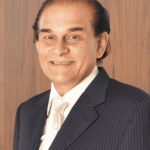
Harsh Mariwala
Chairman of Marico & Founder of ASCENT
Harsh Mariwala is the Chairman of Marico Group and the Founder of ASCENT Foundation, a pioneering initiative for entrepreneur-led growth. With decades of experience in building one of India’s most successful FMCG brands, he is widely recognised for his expertise in scaling businesses, fostering innovation, and driving sustainable growth. His journey from a family-run business to a global enterprise continues to inspire entrepreneurs and business leaders alike.