What got you here will not get you there. It is one of the most repeated truths in entrepreneurship and one of the hardest to act on. The habits, instincts, and leadership style that helped you build your business in its early stages can quietly become the very things holding it back. Scaling requires a different kind of thinking. It requires the founder mindset, a deliberate way of leading that shifts focus from doing to building, from controlling to trusting, and from short-term survival to long-term enterprise growth. This blog breaks down what that mindset looks like, the traits that define it, and the practical steps you can take to intentionally develop it.
Defining the Founder Mindset: Ownership vs. Operation
The founder mindset is not about doing everything yourself. It means being fully responsible for the business’s direction, even if you’re not doing every task. Most early-stage founders operate with an “I know best” approach, which works when the team is small. But as the business scales, that same instinct becomes a ceiling.
What separates growth-stage founders from managers is how they handle ambiguity. Managers pursue consistency and operate within established frameworks. Founders manage unpredictability and create new opportunities. Intellectual humility is central to this change. The moment a founder moves from “I have the answers” to “I learn better alongside others,” the real growth begins.
Every founder who scales well learns to own outcomes fully, without pointing fingers when things go wrong. They also understand how to remain dedicated to the long-term strategy without being drawn into short-term distractions. When the evidence calls for a shift in direction, they adjust promptly.
7 Core Traits of Growth Stage Founders
The qualities of an entrepreneur who scales successfully go beyond ambition. They show up in how a founder thinks, decides, and leads under pressure.
1. Resilience and the Anti-Fragile Approach
Resilient entrepreneurs go beyond merely bouncing back from challenges. They utilise them. A product setback, a market change, or a poor quarter serves as fuel for developing more robust systems and sharper leadership instincts. Anti-fragility, which refers to the ability to grow stronger under pressure, not just survive it, is what resilience in entrepreneurship truly looks like. The pressure makes you better, not just tougher.
2. Strategic Ownership Over Operations
Taking responsibility for outcomes does not mean overseeing every process. In the growth stage, founders recognise the distinction between being accountable for outcomes and participating in every decision. They focus on the path the company is taking instead of managing the completion of specific tasks. Transitioning from daily crisis management to generating value is what enables scaling.
3. The Ability to Decentralise
One of the hardest transitions for any founder is stepping back from the role of chief problem solver. As the business grows, the founder’s job is to become the chief vision aligner: someone who sets direction clearly enough that teams can make wise decisions independently. This requires genuine trust in the people you have hired and the systems you have put in place.
4. Calculated Risk-Taking, Not Recklessness
Growth always involves risk. The distinction between a prudent bet and a reckless one depends on how thoroughly the decision has been assessed before investing resources. Developing strong decision-making skills for founders is less about certainty and more about how thoroughly a decision has been assessed before resources are committed. Founders who test their ideas through networking, cross-sector perspectives, and mentorship from experienced advisors make more accurate decisions with greater assurance.
5. Continuous Learning and Intentional Unlearning
What got a business to its current size will not necessarily take it further. Growth-stage founders actively identify management styles and assumptions that have become outdated, and they replace them with more human-centric, collaborative approaches to leadership.
6. Emotional Intelligence as a Leadership Strategy
Leadership at the founder level can be genuinely isolating. The decisions are bigger, the stakes are higher, and there are fewer people you can be fully honest with. Founders with strong emotional intelligence recognise this weight and build trusted support systems around them rather than carrying everything alone. EQ is not a soft skill; it is a strategic one.
7. Long-Term Thinking with Short-Term Discipline
Sustainable growth requires balancing two essential elements at the same time: a clear long-term vision and the discipline needed to carry out short-term actions effectively. Growth-stage founders do not trade one for the other. They plan years ahead while staying operationally sharp in the work of today.
Surround yourself with founders who push you to think and grow differently.
Shifting from “Doing” to “Orchestrating”
At a certain stage of growth, the founder may become the bottleneck. Every decision waits for their input. Every escalation lands on their desk. Recognising this moment is the first step toward moving beyond it.
The shift from doing to orchestrating is not about stepping away. It is about leading differently. Instead of giving instructions, the founder starts asking better questions. Instead of holding all the answers, they create clarity that allows others to find them. When founders empower their leaders with context and trust rather than control, they build a culture where ownership is shared, and an innovation mindset takes root at every level of the organisation.
Avoiding the “Founder Traps”: Common Mental Pitfalls
Even experienced founders fall into patterns of thinking that slow them down. The ‘Hero Complex’ makes a founder believe they are the only one capable of solving the hard problems, which stalls delegation and burns out the team. The sunk cost fallacy keeps founders pouring resources into strategies that are clearly not working simply because they have already invested in them.
Isolation and tunnel vision are perhaps the most dangerous. When a founder stops seeking outside perspectives, blind spots multiply. Short-termism quietly erodes the foundation on which the business is built by focusing on immediate wins at the cost of long-term positioning. Awareness of these traps is the first and most important defence against them.
Practical Steps to Evolve Your Leadership Mindset
Mindset change does not happen through intention alone. It requires new inputs and new habits.
Substitute the echo chamber with genuine feedback systems. Search for individuals who will express their true opinions, rather than what they think you wish to hear.
Practise radical transparency with peers who are at a similar stage of the journey. They understand the real challenges in a way that advisors often do not.
Substitute the echo chamber with genuine feedback systems. Search for individuals who will express their true opinions, rather than what they think you wish to hear.
Practise radical transparency with peers who are at a similar stage of the journey. They understand the real challenges in a way that advisors often do not.
Substitute the echo chamber with genuine feedback systems. Search for individuals who will express their true opinions, rather than what they think you wish to hear.
Practise radical transparency with peers who are at a similar stage of the journey. They understand the real challenges in a way that advisors often do not.
- Substitute the echo chamber with genuine feedback systems. Search for individuals who will express their true opinions, rather than what they think you wish to hear.
- Practise radical transparency with peers who are at a similar stage of the journey. They understand the real challenges in a way that advisors often do not.
- Apply the 10% Rule. Dedicate roughly 10% of your week for thinking, reflecting, and structured peer learning. Not every hour needs to produce output.
Step back from the day-to-day deliberately. Some of the best decisions come from the time spent examining the bigger picture with fresh eyes rather than staying heads-down in execution.
How ASCENT’s Ecosystem Cultivates the Founder Mindset
ASCENT is built around one belief: that surrounding yourself with the right people accelerates growth faster than any single programme or mentor can.
- Trust Groups acts as a founder’s own board of advisors. These curated peer groups meet monthly to talk openly about everything from business decisions to the realities of leadership in an environment built entirely on trust.
- PowerUp Sessions connects founders with top mentors in one-on-one sessions designed to unlock clarity, sharpen focus, and drive growth. Whether the topic is finance, operations, marketing, or people strategy, these sessions offer founders access to insights that directly sharpen their thinking and decision-making.
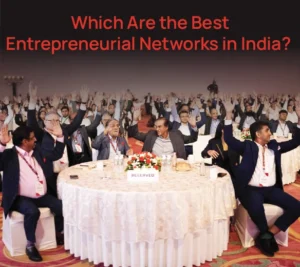
- ASCENT Huddles are where the scale of shared intelligence becomes visible. With 50 to 100 participants coming together from different industries and sectors, each Huddle becomes a structured exchange of experience and perspective. Founders learn not just from experts but from each other, across functions, verticals, and growth stages.
- Special Interest Groups (SIGs) go deeper into the topics that matter most to your business. Whether it is AI, D2C, marketing, or operations, these sessions foster entrepreneurship networking by connecting founders with peers who are navigating the same space and understand the specific challenges that come with it.
Whether through a structured entrepreneur meet or a Trust Group session, the conversations that shift your thinking rarely happen in isolation.
Take the first step toward scaling beyond yourself with the right peer community.
Conclusion
The founder mindset is not fixed at the point you start your business. It evolves, or it becomes a constraint. Scaling beyond yourself requires moving from doing to thinking, from controlling to trusting, and from isolated decision-making to collective intelligence. At ASCENT Foundation, the ecosystem is designed to support exactly this kind of growth. If you’re ready to lead your business into its next phase, explore ASCENT membership or reach out to our team and initiate the first step now.
FAQ’s

ASCENT Foundation
ASCENT Foundation is a non-profit community for growth-stage entrepreneurs, focused on mentoring and peer learning. Founded in 2012 by Harsh Mariwala, ASCENT brings entrepreneurs together to share knowledge, build meaningful connections, and support each other’s growth.